


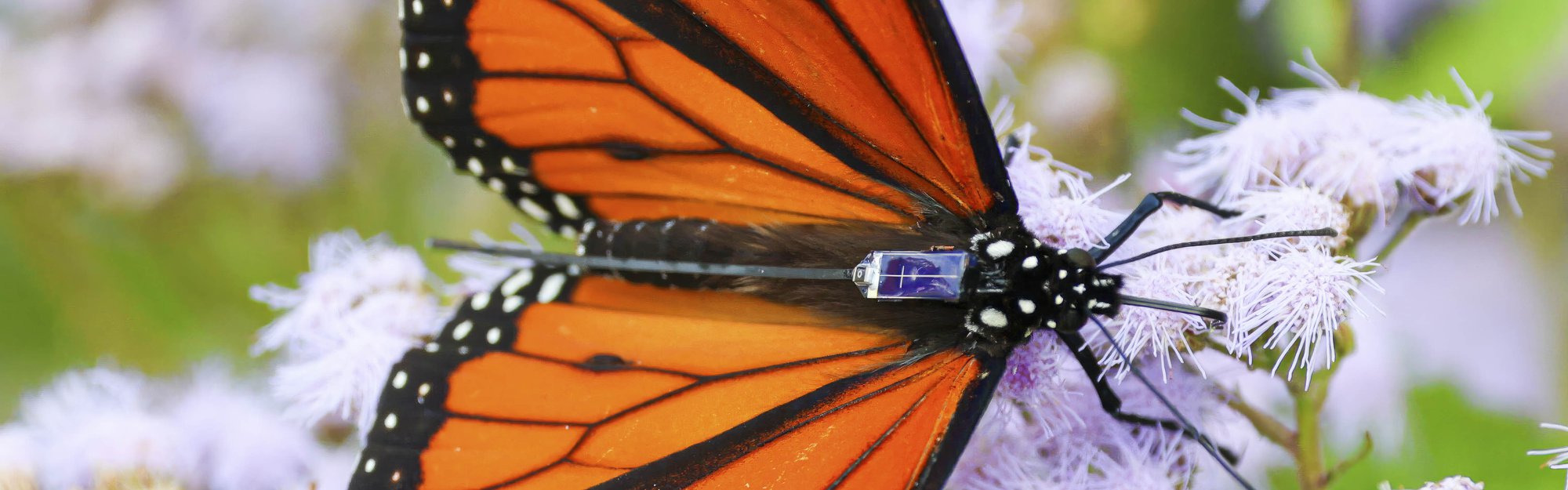
Project Monarch
Terras help track a butterfly to Mexico.
Made by the team behind the tags, in Cape May, NJ.
Every Terra Station listens for the tiny radio tags on migrating monarchs. Put one in your yard and you join the network that made the first individual monarch tracks possible.
Photo: Sheldon Blackshire
Why a station? A phone hears a tag only while someone is standing nearby. A station hears it all season, day and night, and tells you which butterfly it was. Not on the flyway? It still names every bird in your yard and listens for tagged birds and bats on Motus.
Free ground shipping · 30-day returns
Groundbreaking Monarch Butterfly Data — Terra is There
In November 2025 the front page of the New York Times reported a first: individual monarch butterflies tracked along their migration. The tags were BlūMorpho solar tags, made by Terra’s parent company, Cellular Tracking Technologies, and light enough for a butterfly to carry.
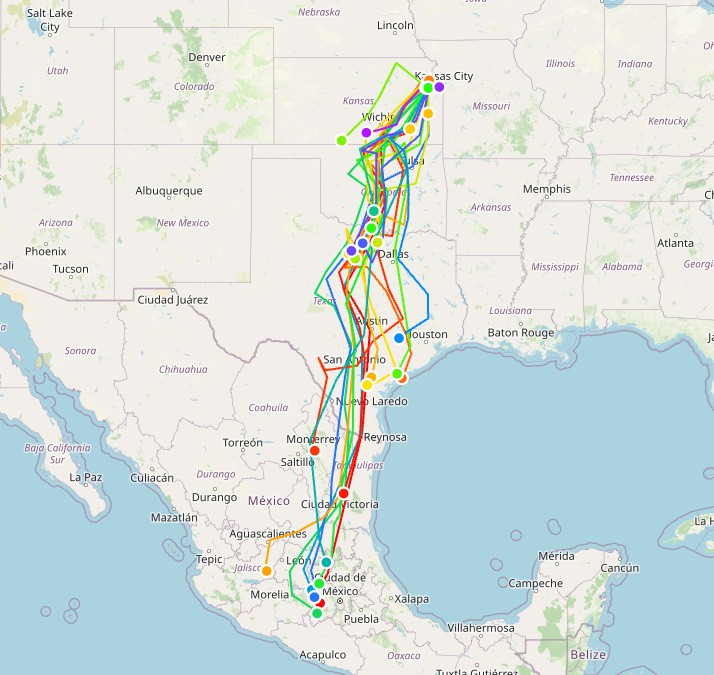
The breakthrough track came from a monarch released at Cape May Point. As it moved south, Terra Stations in backyards along the route logged it alongside the Motus network, and the Terra Network supplied part of the data used to map the migration toward Mexico.
More than 400 monarchs carried tags in fall 2025, with more each season, and the project is still running. Every station that is up and listening is already part of it.
A tagged monarch’s journey, as it appears in the Terra app.
How your Terra takes part
Three steps, and the station does all of them for you
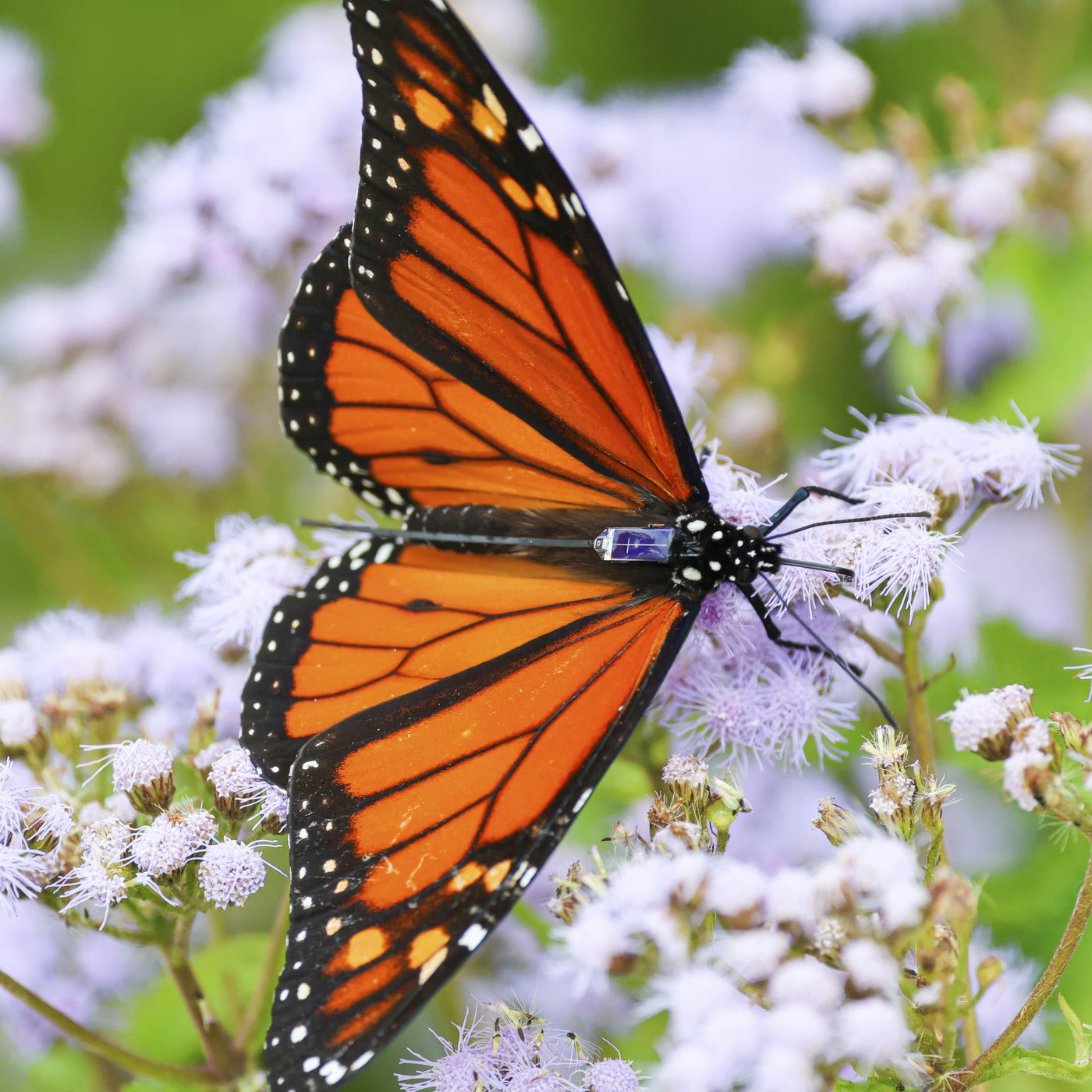
A monarch gets a tag
Researchers fit a BlūMorpho solar radio tag, a fraction of a monarch’s weight, at release sites like Cape May Point. The tag chirps as the butterfly flies south.

Your Terra hears it
Every Terra Station has the matching 2.4 GHz receiver built in. When a tagged monarch passes within range of your yard, the station logs it on its own. Nothing to set up, nothing to press.
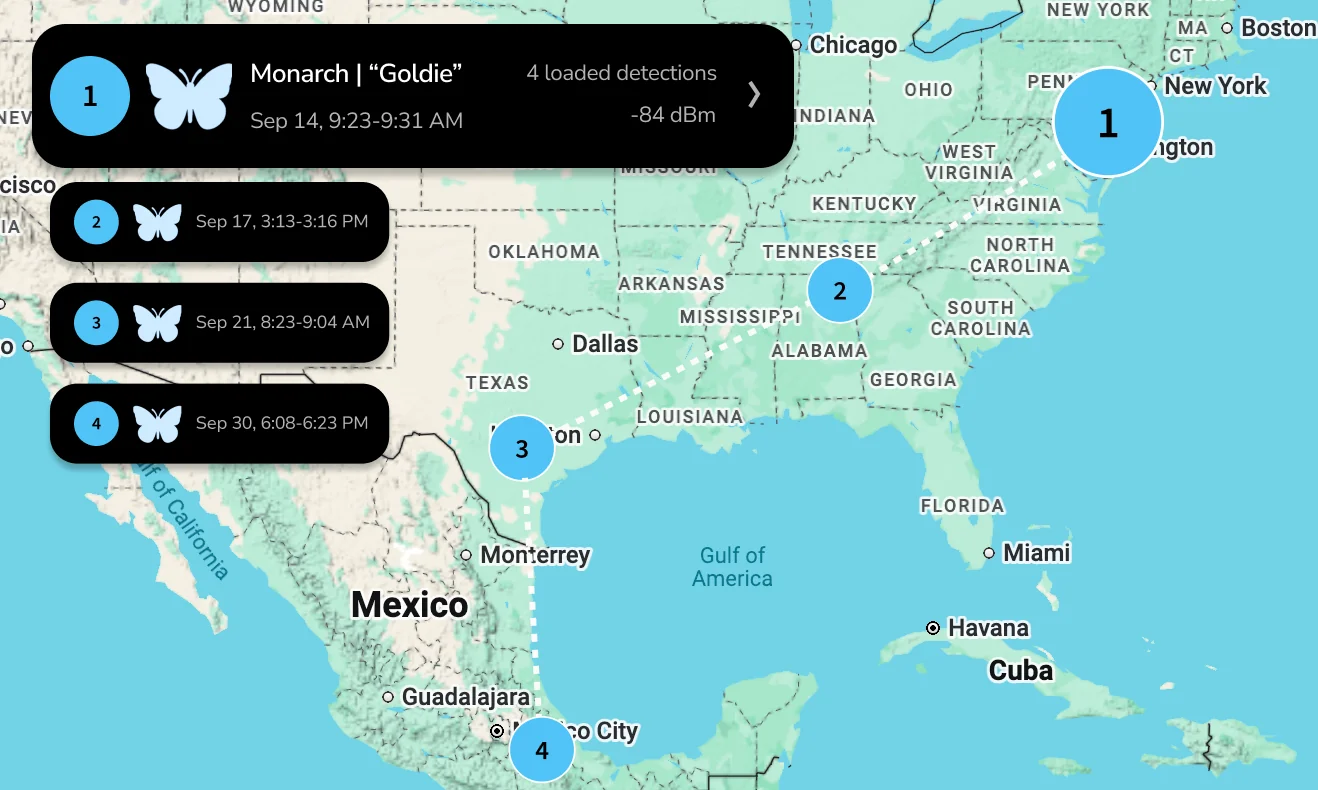
The journey appears on the map
Your detection joins the Project Monarch and Motus data, and the butterfly’s route shows up in the Terra app and on the public map, with your yard as one of its waypoints.
Why your yard matters
Monarchs cross the continent through backyards, parks and farm fields, not nature reserves. A tagged butterfly only shows up on the map where a receiver hears it, so every gap between stations is a stretch of the journey nobody sees.
Each new Terra closes a gap. Together the stations show where monarchs actually go, when they move, and where they stop to rest and feed. That is the information conservation needs to protect the milkweed, the nectar and the stopover habitat along the way.
The same station identifies every bird it hears and listens for tagged birds and bats on the Motus network, so it is doing science all year, not just in monarch season.
The Terra network, live · Open the live map →
Join the project
Help the monarchs and reward yourself with Terra
- ✓ Every bird in your yard identified by sound, day and night, with a free app to listen live from anywhere
- ✓ A built-in radio-tag receiver for monarchs, and for tagged birds and bats on the Motus network
- ✓ Your detections shared with the researchers running Project Monarch
- ✓ Live feeds from wild places around the world, on your phone or your TV
- ✓ Terra Pro features free through the end of 2026: weather radar, a 48-hour rewind, station sharing
Made by Cellular Tracking Technologies in Cape May, New Jersey, the team behind the tags.
Good questions
- Do I have to do anything to take part?
- No. Tag detection is on from the moment your station is online. If a tagged monarch passes, the station records it and sends it on.
- Will I know which butterfly it was?
- Yes. Each tag has an ID, and the app shows the butterfly’s journey as a series of detections, yours among them.
- Does the station need internet?
- Wi-Fi is needed for live listening and instant uploads. Off the grid, the station keeps recording and stores its detections until it reconnects.
- How far can it hear a tag?
- It depends on placement, but a Terra should pick up any tag that passes through your yard, and often the surrounding neighborhood. Accessory antennas increase the range significantly.
- Where should I put it?
- Outdoors, where it has power and Wi-Fi, with a clear view of the sky if you can. Anywhere along the monarchs’ route helps. And remember it is not just monarchs: Terra connects you to all kinds of wildlife.
Plug in to the flyway.
Order a Terra today and your yard starts listening for tagged monarchs the day it goes online. Running a group, a school or a preserve? We can help you scope more than one.
Want the science, or a group project? Terra for research → · Terra for community science →